
Last updated
How fast can you deliver during an emergency?
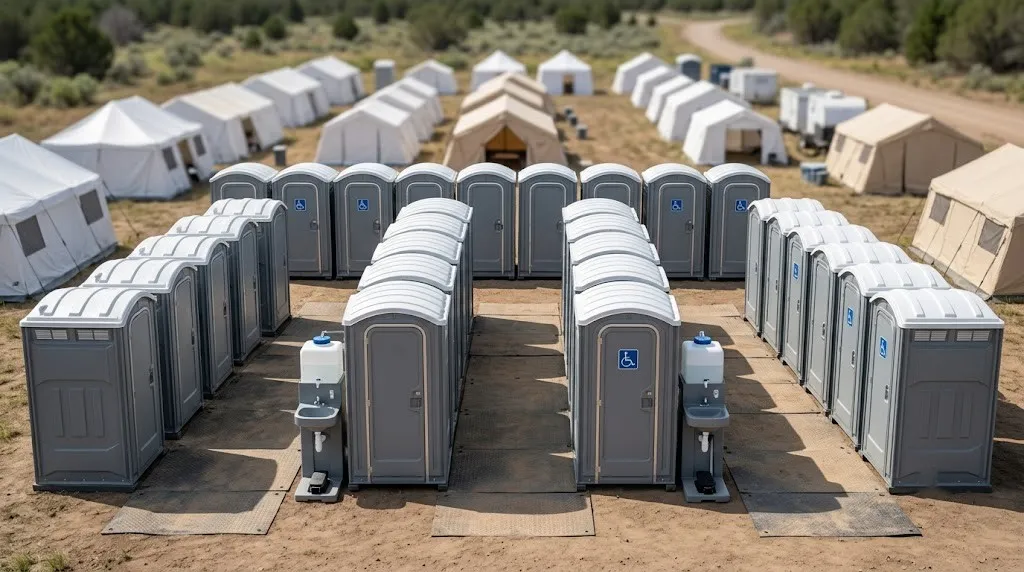
Speed is the whole point of emergency porta potty rental work. We keep standard units and handwashing stations pre-staged so a disaster response does not wait behind a normal delivery queue. Chattanooga sits at the center of our coverage, and we already run routes out to East Ridge 6.6 miles south, Harrison 7.9 miles northeast, Red Bank 9.3 miles northwest and Lakeview 9.3 miles south, so a shelter or staging area in any of those spots is not a special trip. Cleveland, at 27.1 miles east, is farther but still inside a normal response radius.
A standard unit holds a 60 to 70 gallon tank and stands about 92 inches tall, footprint roughly 44 by 48 inches, so it drops into a parking lot, a church lawn or a gravel pad without site prep. For a shelter running continuously, that tank size matters: ANSI/PSAI Z4.3 sets a baseline service interval of once weekly for up to 10 users over a 40 hour week, but disaster deployments run longer hours with more people, so we tighten that schedule on the ground rather than sticking to the baseline. If you are not sure how many units a shelter population needs, the how many porta potties do I need guide walks through the math, and our porta potty placement guide covers ground conditions and access.
What sanitation gear actually gets used in a disaster response?
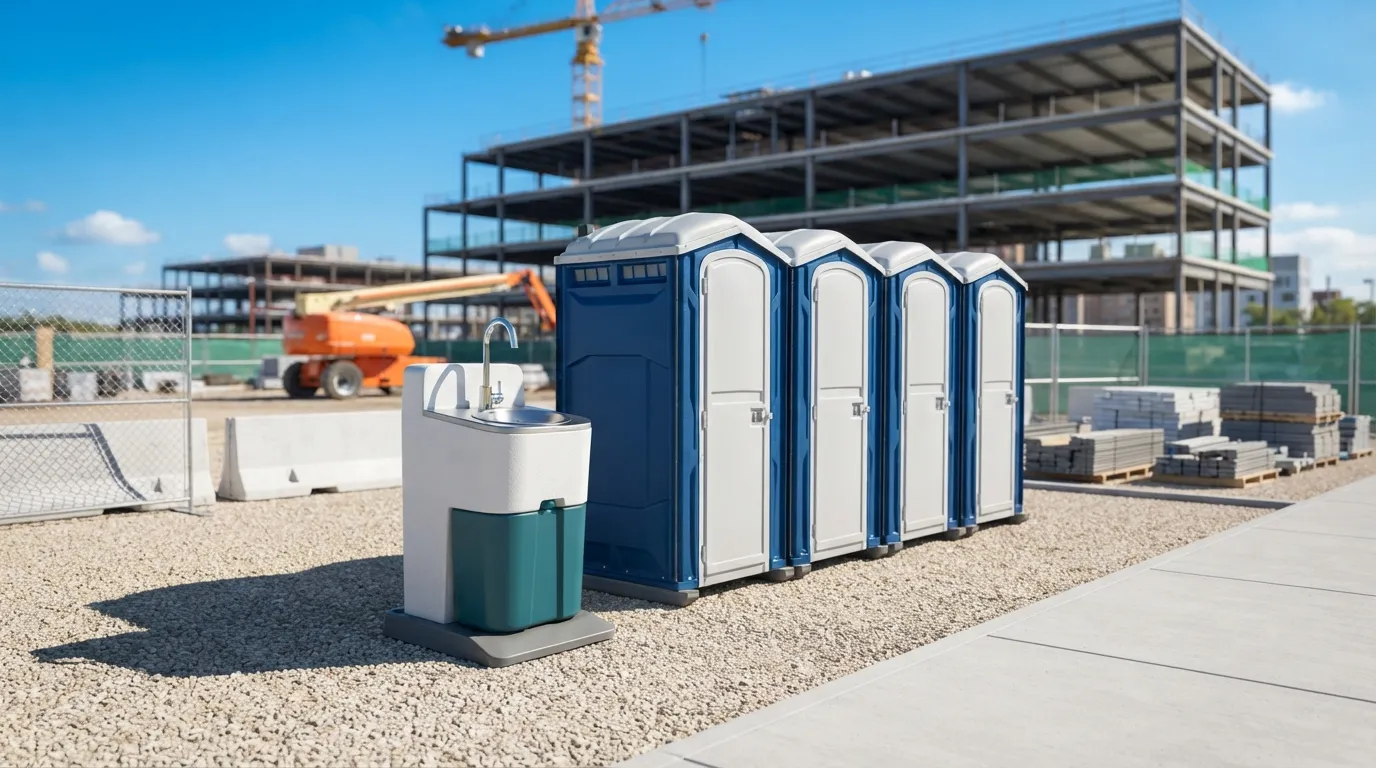
Most deployments need more than toilets. A single event can call for portable restroom rental units for a shelter, a restroom trailer rental for a command post or medical staging area, and a handwashing station rental at feeding points, since hand sanitizer alone does not meet 29 CFR 1910.141(d)(2), which requires soap and towels or a hand-drying device at washing facilities. If work crews are clearing debris, temporary fence rental sections keep the public out of hazard zones, and a roll-off dumpster rental clears storm debris fast, with OSHA 1926.25 covering the housekeeping standard for keeping work areas clear of scrap.
Water systems fail first in a disaster, and OSHA 1926.51(a)(1) requires an adequate supply of potable water at any place of employment, which is why a response site needs a working water plan alongside the toilets, not an afterthought. For crews working outdoors after dark clearing roads or debris, OSHA 1926.56(a) sets minimum illumination levels, so a light tower rental often travels with the same order as the restrooms. If a command post needs power for radios, lighting and charging stations, a temporary power pole with 200 amp service is a common request alongside a mobile office trailer rental for coordination staff. Displaced residents sometimes need short-term storage too, and a storage container rental or 20ft storage container holds salvaged belongings while a home dries out.
What does emergency sanitation cost compared to a normal rental?
Disaster response pricing follows the same bands as any other rental, it is the urgency and duration that shift the total. A shelter running for a week costs differently than a three-day deployment, so know your timeline before you call.
| unit | day | week | month |
|---|---|---|---|
| standard | $100 - $350 | $130 - $500 | $125 - $325 |
| ada | $200 - $400 | $200 - $240 | not listed |
| dumpster | $51 - $112 | $426 - $778 | $426 - $500 |
ADA Standards section 213.2 requires that at least 5 percent of clustered single-user units be accessible, never fewer than one, which matters at a shelter serving elderly or disabled residents; our ADA accessible porta potty units meet that clear-width and turning-space standard. For full cost breakdowns outside a disaster scenario, see porta potty rental cost and monthly porta potty rental. Septic systems can also fail or back up during flooding; if a tank needs emptying fast, our emergency septic service and septic pumping service run the same priority queue as the restroom fleet. Chattanooga area septic tanks are typically pumped every 3 to 5 years under normal conditions, but flood intrusion can force an out-of-cycle pump job regardless of schedule.
How many toilets does a shelter actually need?
OSHA 1926.51(c)(1) sets construction ratios: one toilet per 20 workers, then one seat and one urinal per 40 up to 200. Shelters are not construction sites, but we use similar math for headcount, then adjust up for population turnover and length of stay.
Do you deliver during active severe weather?
We deliver as conditions allow and safety permits; crews will not run into a tornado warning or flash flood zone. Once roads clear, Chattanooga deliveries typically resume within hours, and we prioritize shelters and medical staging first.
What if the site has no paved access?
Our trucks work on gravel, grass and packed dirt. A roll-off delivery needs about 60 feet of straight clearance behind the truck; tell us the ground type when you call so we bring the right unit.
Can you supply handwashing without running water?
Yes. Our stations carry their own tank, soap and towel dispensing to meet 29 CFR 1910.141(d)(2). See portable sink rental for options beyond a basic sanitizer stand.
Who do we call after hours?
Use contact or request a quote any hour; disaster lines get answered outside normal business hours. Check service areas to confirm we cover your exact location.
Next step
Get a delivery date
Tell us the address, the dates and the headcount. We size the order and confirm the route.