
Last updated
What Do Federal Rules Require for Farm Restrooms?
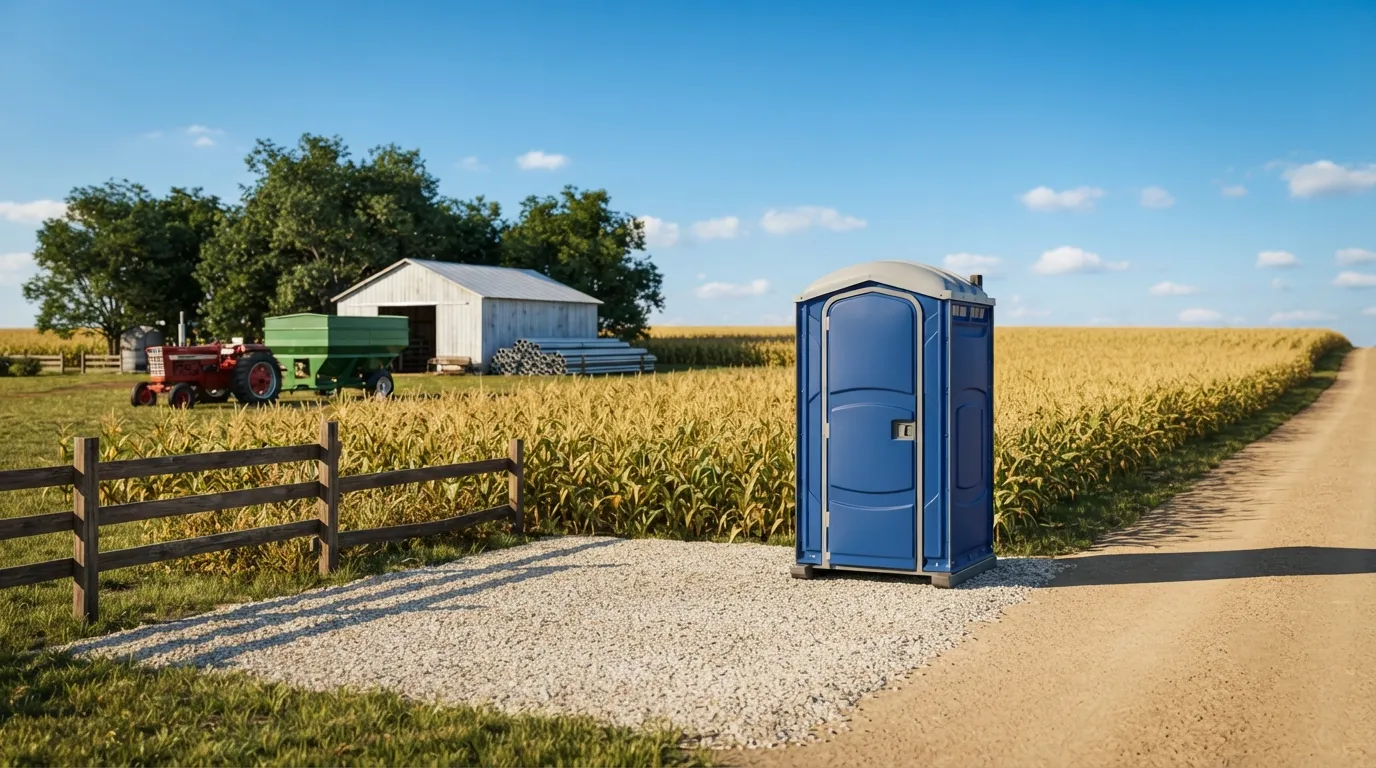
If your operation has hand-labor employees, OSHA 1928.110 sets the baseline: potable water, toilets, and a handwashing setup, one facility for every 20 workers, placed within a quarter mile of where people are working the field. That's different from a construction site, where OSHA portable toilet requirements follow the 1926.51(c) ratio instead, scaled by crew size rather than walking distance. Farms often run both rule sets at once, especially during harvest when a barn renovation or new fence line brings construction workers onto the same property as field crews. Chattanooga Porta Pros sets up standard porta potty rental units at the edge of fields, orchards and packing areas so nobody's walking a half mile back to the barn. Water access matters too. OSHA 1926.51(a)(1) calls for an adequate supply of potable water at any place of employment, and we pair that with handwashing station rental units stocked the way 29 CFR 1910.141(d)(2) requires, soap and towels or a hand-drying device, not just a sanitizer pump. If your crew handles pesticides or spray treatments, OSHA 1926.51(f)(1) applies specifically to washing after paints, coatings, herbicides or insecticides, so a wash station near the mixing and loading area isn't optional. For farms further out toward Cleveland or Collegedale, the quarter mile rule usually means more than one unit spread across the property rather than one big cluster by the gate.
How Many Units Does a Farm Actually Need?
It depends on crew size and how spread out the fields are, not just acreage. A 20-person picking crew needs one toilet facility under OSHA 1928.110, but once you're running two crews across separate parcels, you need coverage at each site because the quarter mile walk resets per location. Our how many porta potties do I need guide walks through the math for mixed crews, but the short version: don't stack all your units at the farm entrance if the harvest is happening a half mile back. A standard unit holds a 60 to 70 gallon tank and sits about 44 by 48 inches on the ground, small enough to place on a turnrow or gravel pad without blocking equipment. Under the ANSI/PSAI Z4.3 service standard, one unit services up to 10 users comfortably over a 40 hour week, so a 30-person crew is looking at three units minimum plus a buffer for peak harvest days. Seasonal operations near Harrison, about 7.9 miles northeast of Chattanooga, and Red Bank, 9.3 miles northwest, often rent by the month rather than the week because tobacco, tomato and produce seasons run long. If you've got a farm stand or agritourism event drawing the public, that's a different load entirely, closer to what we plan for festival restroom rental or county fair restrooms jobs, and we'll talk through both needs on the same visit.
Where Should Units Go on a Working Farm?
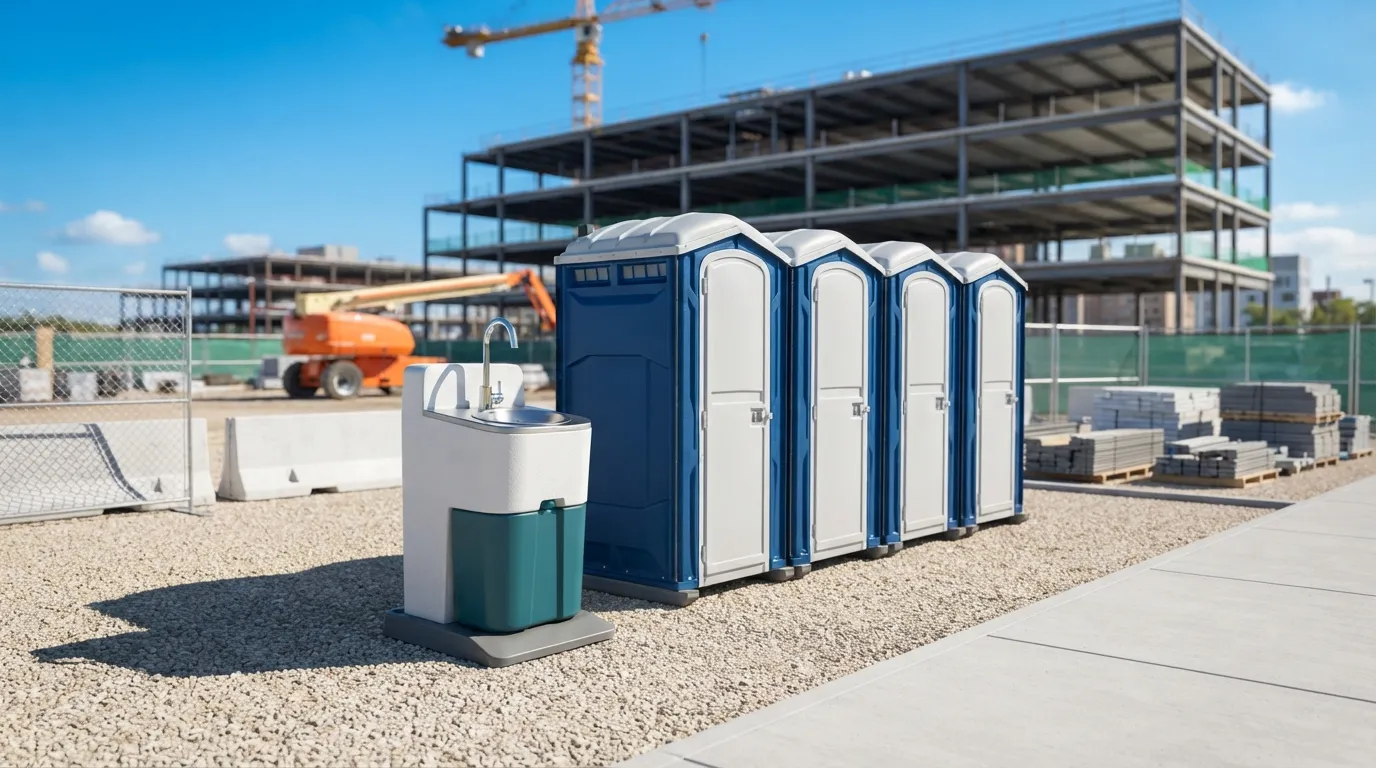
Place units on stable, accessible ground near the work area, not tucked behind machinery where a walk gets long or a delivery truck can't reach. Delivery to a farm site needs roughly 60 feet of straight clearance behind the truck for a roll-off or trailer drop, so gate width and turnaround room matter when you're booking. Our porta potty placement guide covers ground stability, but on farms the biggest issue is usually mud season access, not the placement itself. If disabled workers or visitors need access, ADA Standards section 213.2 requires at least 5 percent of clustered single-user units to be accessible, and we stock ADA accessible porta potty units with a 60 inch turning circle per ADA Standards 304.3.1 for exactly that. Farms that also run cleanup after harvest, culled produce, packaging waste, damaged pallets, often add a roll-off dumpster rental alongside the restrooms, and a 10 yard dumpster rental handles most seasonal cleanup without overpaying for space you don't fill. If the farm has a dairy operation or on-site kitchen, a grease interceptor gets pumped once fats, oils, grease and solids reach 25 percent of the liquid depth, which is worth checking through our grease trap pumping service before it backs up during peak production.
| unit | duration | typical price |
|---|---|---|
| standard | day | $150 |
| standard | week | $200 |
| standard | month | $200 |
| ada | week | $185 |
| delivery_fee | month | $172 |
How far in advance should I book for harvest season?
Book two to three weeks ahead if you can. Harvest demand spikes across Chattanooga and everyone's booking the same window. Monthly rentals lock in a unit for the season, and our monthly porta potty rental page has the specifics on term length and swap-out timing.
Do I need separate units for pesticide handling areas?
Yes, if workers apply herbicides or insecticides, OSHA 1926.51(f)(1) requires washing facilities for that specific exposure. A dedicated portable sink rental near the mixing station keeps that separate from general field restrooms.
Can I get restrooms delivered to a remote field?
Usually, yes. We ask about gate width, ground firmness, and whether a truck has clear approach. Most working farms around Chattanooga have adequate access, but call before harvest to confirm the route.
What if my farm also holds public events?
That changes the numbers. A farm stand, corn maze, or wedding barn draws foot traffic well beyond field crew ratios. Check our event restroom rental or wedding restroom rental pages for public-facing counts.
Do you service farms outside Chattanooga city limits?
Yes. We cover surrounding counties including areas near East Ridge, 6.6 miles south, and Signal Mountain, 14.1 miles northwest. Request a quote with your address for exact routing.
Next step
Get a delivery date
Tell us the address, the dates and the headcount. We size the order and confirm the route.