
Last updated
What does OSHA actually require for handwashing on a jobsite?
The rule people misquote most is 1926.51(f)(1). It does not mandate handwashing stations everywhere. It kicks in specifically where crews are applying paints, coatings, herbicides or insecticides, or working around other harmful contaminants. If your Chattanooga crew is painting a facade or spraying herbicide along a fence line, you need washing facilities on site, full stop. Separately, general industry workplaces (not construction) follow 1910.141(c)(1)(i) for toilet ratios, and both construction and general industry sites fall under 29 CFR 1910.141(d)(2) once washing facilities exist: soap and towels or a hand-drying device are required, and hand sanitizer alone does not satisfy it. That trips up a lot of site supervisors who stock sanitizer and think they are covered. For a full ratio breakdown by crew size, see our OSHA portable toilet requirements page. Farms have their own standard: 1928.110 requires potable water, toilets and handwashing within a quarter mile walk of hand-labor employees, at one facility per 20 workers. That matters for anyone running farm and agricultural restrooms work near Chattanooga.
How many handwashing stations does my Chattanooga site need?
Pair your handwashing count to your toilet count, not to guesswork. Under 1926.51(c)(1), a site with 20 or fewer workers needs one toilet; add a urinal and a second seat per 40 workers as headcount climbs past that, up to one seat and urinal per 50 workers at 200-plus. ANSI/PSAI Z4.3 sets the servicing baseline at one visit per week for up to 10 users across a 40-hour week, which is a useful starting point when you are scheduling pickups, not a legal minimum. If you are still working out headcount, our how many porta potties do I need guide walks through the math, and handwashing station rental covers unit types once you know the number. Renovation crews working residential jobs in Chattanooga, including projects near home renovation porta potty sites, still need to hit these ratios even on small crews.
Where should handwashing stations be placed on site?
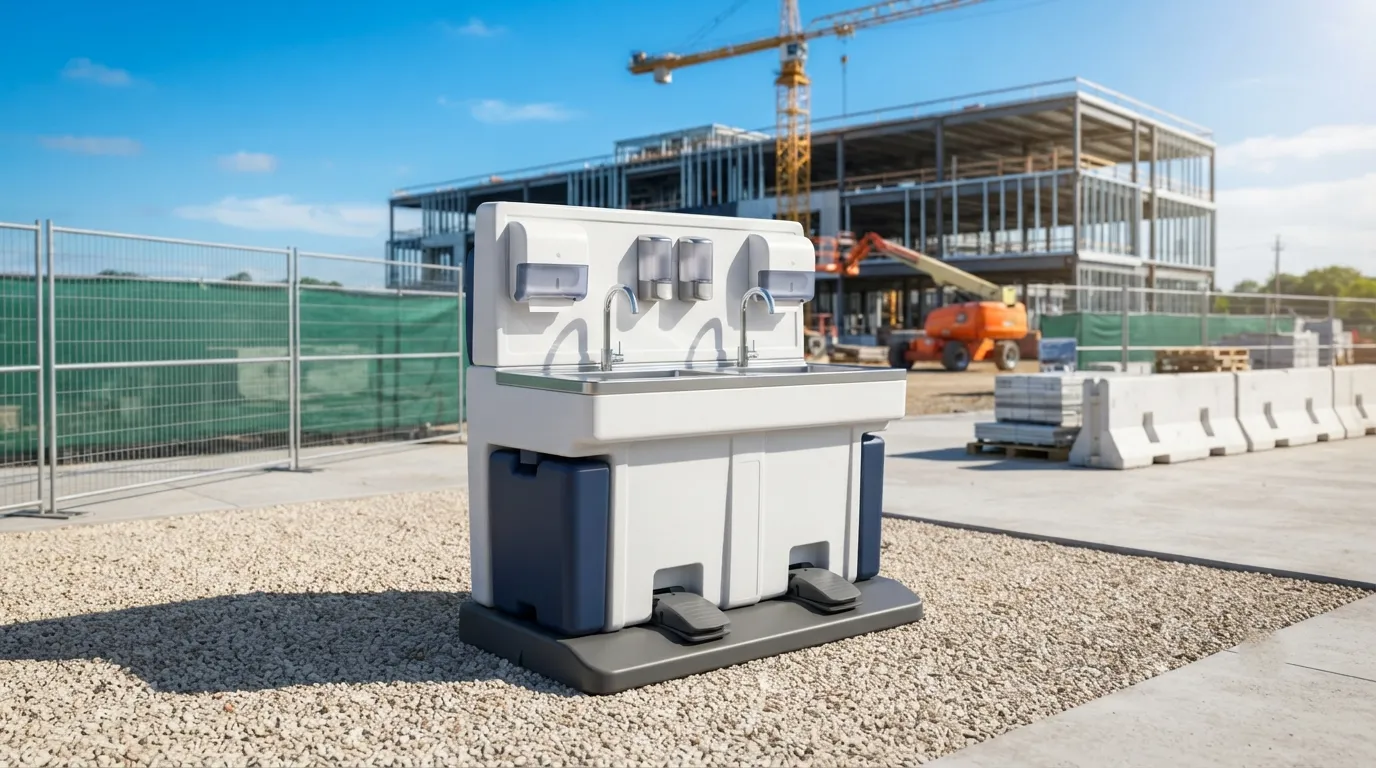
Placement matters as much as count. Keep stations within a reasonable walk of the work zone, on a stable, level surface. ADA Standards section 302.1 requires floor and ground surfaces to be stable, firm and slip resistant, which rules out loose gravel or soft mud for any accessible unit. If you are pairing a handwashing station with an ADA toilet, ADA Standards section 403.5.1 requires 36 inches of clear route width to reach it, and section 304.3.1 calls for a 60 inch turning circle at the unit itself. Operable parts like pumps or faucet levers need to meet section 309.4: usable with one hand, no tight grasping or twisting, and no more than 5 pounds of force. Our porta potty placement guide and ADA restroom requirements pages go deeper on siting rules. Event organizers in Chattanooga running a festival restroom rental or marathon restroom rental setup should plan handwashing stations at every restroom cluster, not just at the entrance.
Do porta potties count as handwashing stations?
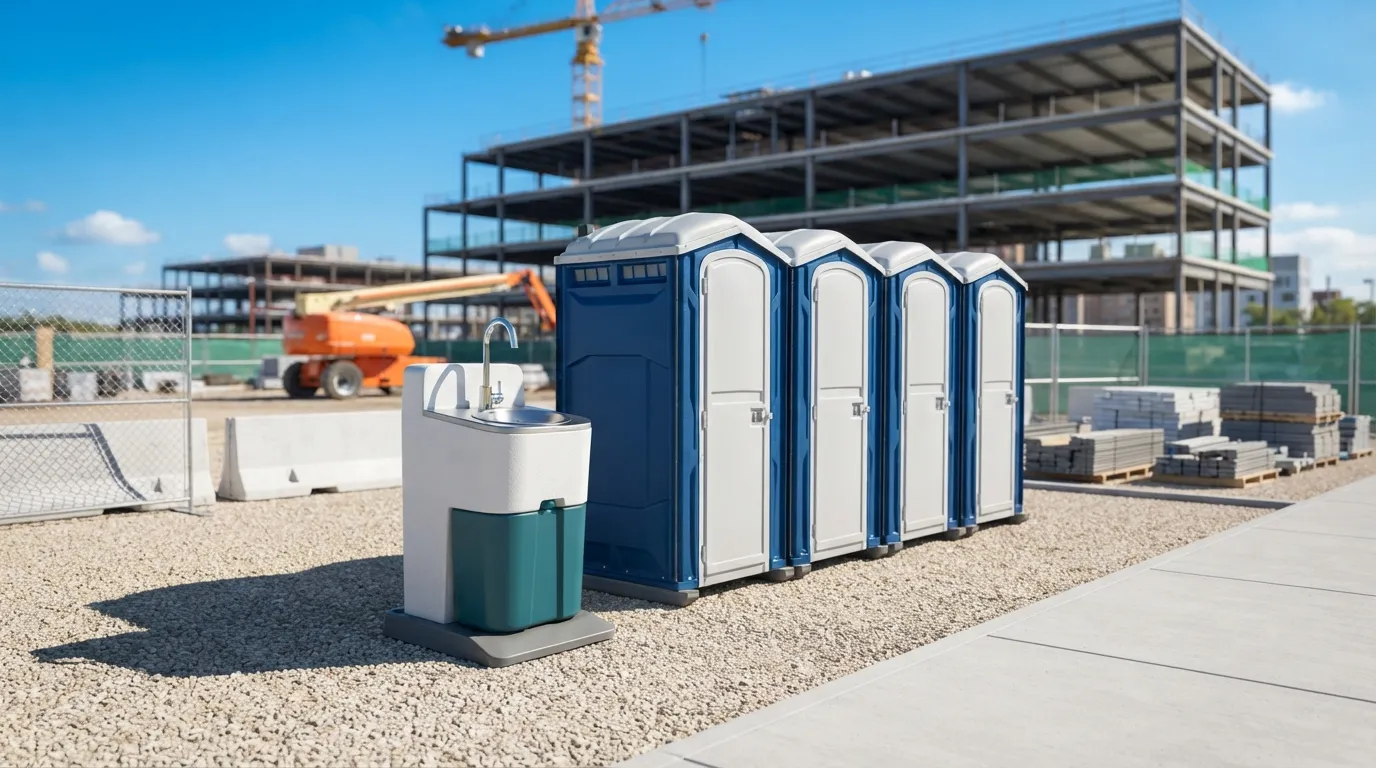
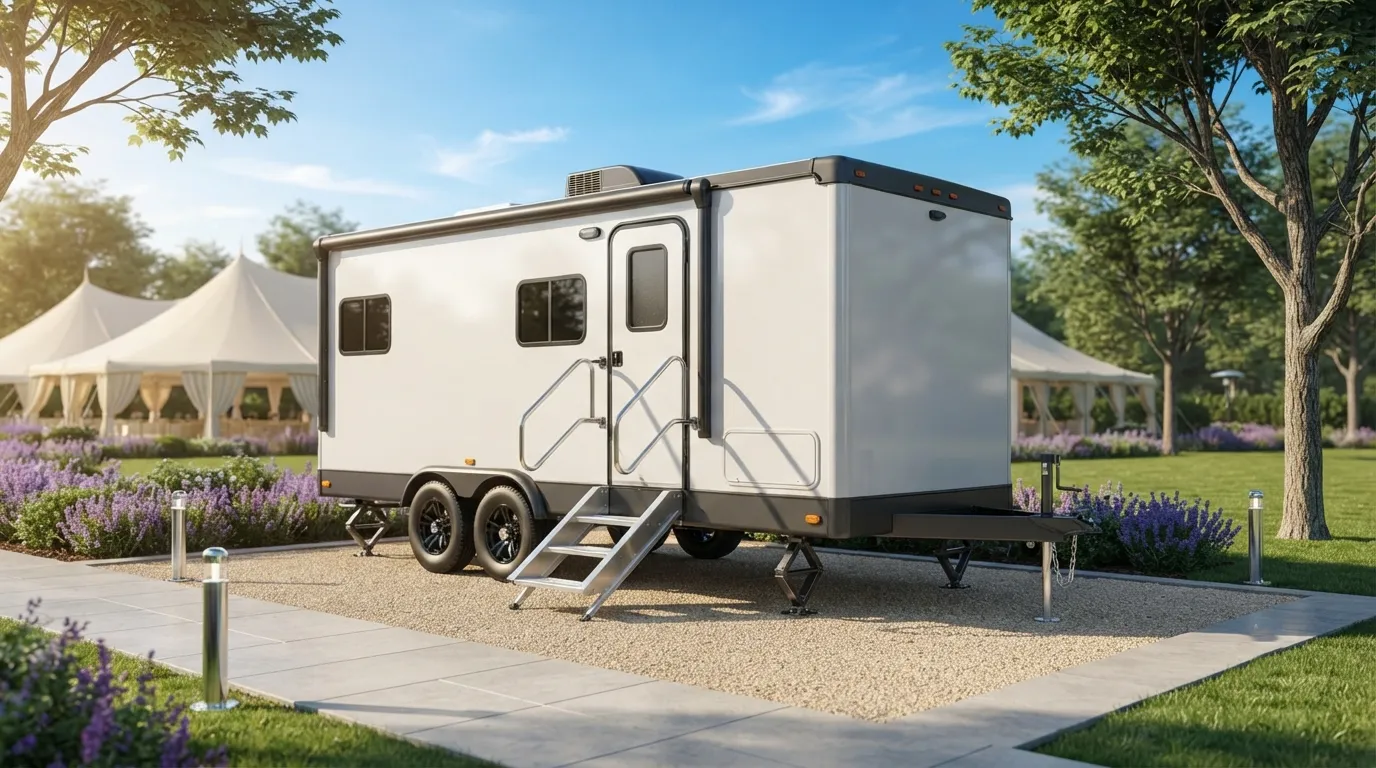
No. A standard portable toilet holds a 60 to 70 gallon tank and is not a washing facility on its own. Handwashing needs a separate unit with water, soap and towels or a hand dryer to satisfy 29 CFR 1910.141(d)(2). Chattanooga Porta Pros pairs standard porta potty rental units with dedicated portable sink rental stations on most job sites, and offers hand sanitizer station rental as a supplement, never a substitute, since sanitizer does not meet the towel-and-soap requirement. For sites that want washing built into the restroom itself, a deluxe flushable porta potty or a stall in our 2 stall restroom trailer includes an interior sink. Grease-heavy food service operations near Chattanooga restaurants should also check grease trap pumping schedules, since interceptors get pumped once fats, oils, grease and solids reach 25 percent of liquid depth, a separate but related sanitation concern.
Pricing for handwashing and paired sanitation units
| unit | duration | typical price |
|---|---|---|
| standard porta potty | day | $150 |
| standard porta potty | week | $200 |
| standard porta potty | month | $200 |
| delivery fee | day | $150 |
| service fee | week | $60 |
See porta potty rental cost and monthly porta rental for full detail on how delivery and service fees stack against unit rates.
How often do handwashing stations need to be serviced?
ANSI/PSAI Z4.3 sets a one-visit-per-week baseline for up to 10 users over a 40-hour week, refilled with soap and water and restocked with towels. Busier sites need more frequent visits. See how often are porta potties cleaned for a fuller service schedule.
Is hand sanitizer enough to meet OSHA rules?
No. 29 CFR 1910.141(d)(2) requires soap and towels or a hand-drying device wherever washing facilities are provided. Sanitizer can supplement that, but it does not replace it on an Chattanooga jobsite inspection.
Do special contaminants like paint or pesticide change the requirement?
Yes. 1926.51(f)(1) specifically applies when crews apply paints, coatings, herbicides or insecticides. That triggers a washing facility requirement beyond the general toilet ratio in 1926.51(c)(1).
Can I rent a handwashing station for a single weekend event?
Yes. Weekend rentals work for weddings, festivals and races. Check event restroom rental or wedding restroom rental for setups that pair handwashing with restroom units.
What is the closest service area to Chattanooga for fast delivery?
Chattanooga Porta Pros also delivers to East Ridge, 3.5 miles south, and Lakeview, 5.4 miles north. See service areas for the full coverage map.
Next step
Get a delivery date
Tell us the address, the dates and the headcount. We size the order and confirm the route.